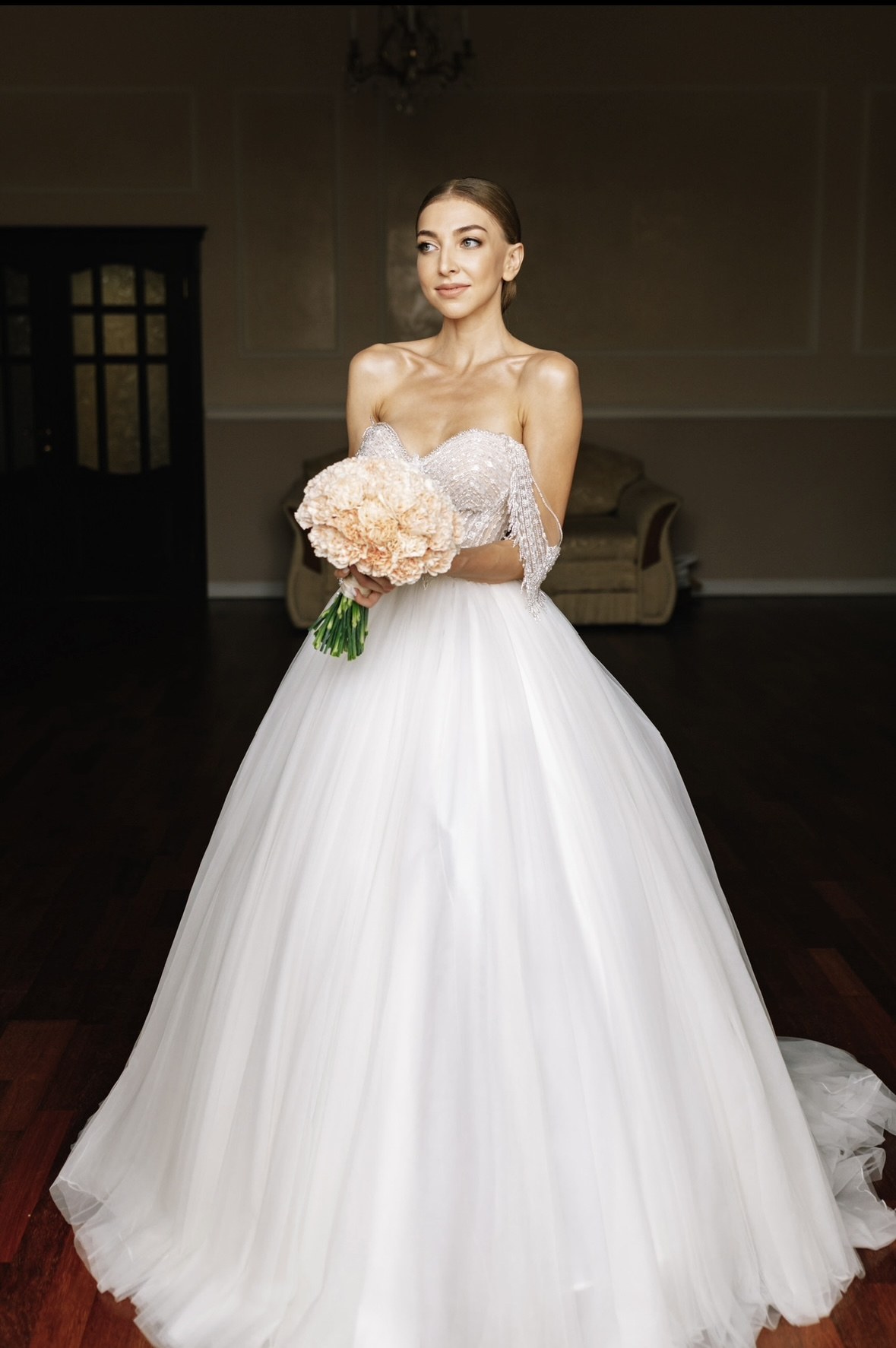
The single most common thing brides ask me about, more than any specific look, is whether their makeup will actually survive the day. It's a fair question. Most Italian weddings — on Lake Como, Lake Garda, in Tuscany or Venice — happen outdoors, in full summer heat, often with a ceremony in direct sun followed by hours of dancing. That combination is genuinely hard on makeup and hair, and it's worth understanding what actually helps, versus what's just marketing language.
What heat and humidity actually do to your makeup
Heat increases oil production, which breaks down foundation from underneath and causes it to slide rather than wear off evenly. Humidity does something different — it stops setting products from finishing their job, so powder can sit on the skin without ever really locking anything in place. Sweat affects concealer under the eyes first, since that's the thinnest skin on the face. And hair is its own problem entirely: humidity relaxes curl and structure, which is why a style that looked perfect at 10am can be visibly different by the ceremony at 4pm if it wasn't built correctly from the start.
What actually holds up
None of this is solved by simply using "more" product or a heavier formula — that usually makes things worse. What works is a combination of the right preparation and the right products for the specific climate and venue that day:
- Skin prep that balances, not overloads. Over-moisturizing before a hot day undermines everything applied afterward; the goal is calm, balanced skin, not maximum hydration.
- Long-wear, transfer-resistant formulas chosen specifically for heat, not just whatever tests well in an air-conditioned studio.
- Airbrush application for brides who want extra longevity — a thin, even layer that bonds to skin rather than sitting on top of it. More on how it compares to traditional application in this guide.
- Strategic setting — powder only where it's actually needed, not blanket-applied everywhere, which is what leads to a cakey, unnatural finish by the afternoon.
- Hair techniques built for humidity, not just for how the style looks the moment it's finished — the right pinning and prep make the real difference between an updo that holds and one that doesn't.
- A small touch-up kit left with the bride or her maid of honor, for the handful of things that are easy to refresh mid-celebration without redoing anything.
Why experience is the part that can't be shortcut
Every one of those techniques sounds simple written down. What's harder to teach is knowing how a specific product actually behaves after six hours in real Veneto or Tuscan sun, not a lab test — and adjusting on the spot when a hot morning turns into an unexpectedly muggy afternoon, or a ceremony runs an hour later than planned. That kind of judgment only comes from having done it many times before, across different skin types, venues and weather. It's the same precision and speed I bring backstage at Milan Fashion Week, where there's no time for a second attempt — just applied here to something that has to last a full wedding day instead of a four-minute walk down a runway.
What to ask before you book
If longevity is a real concern for your day — and for most outdoor Italian weddings, it should be — it's worth asking any artist you're considering directly: what products do you use for heat, have you worked this venue or region before, and what happens if the weather changes on the day. For a broader checklist of what to look for, see how to choose a wedding makeup artist for your Italy wedding.