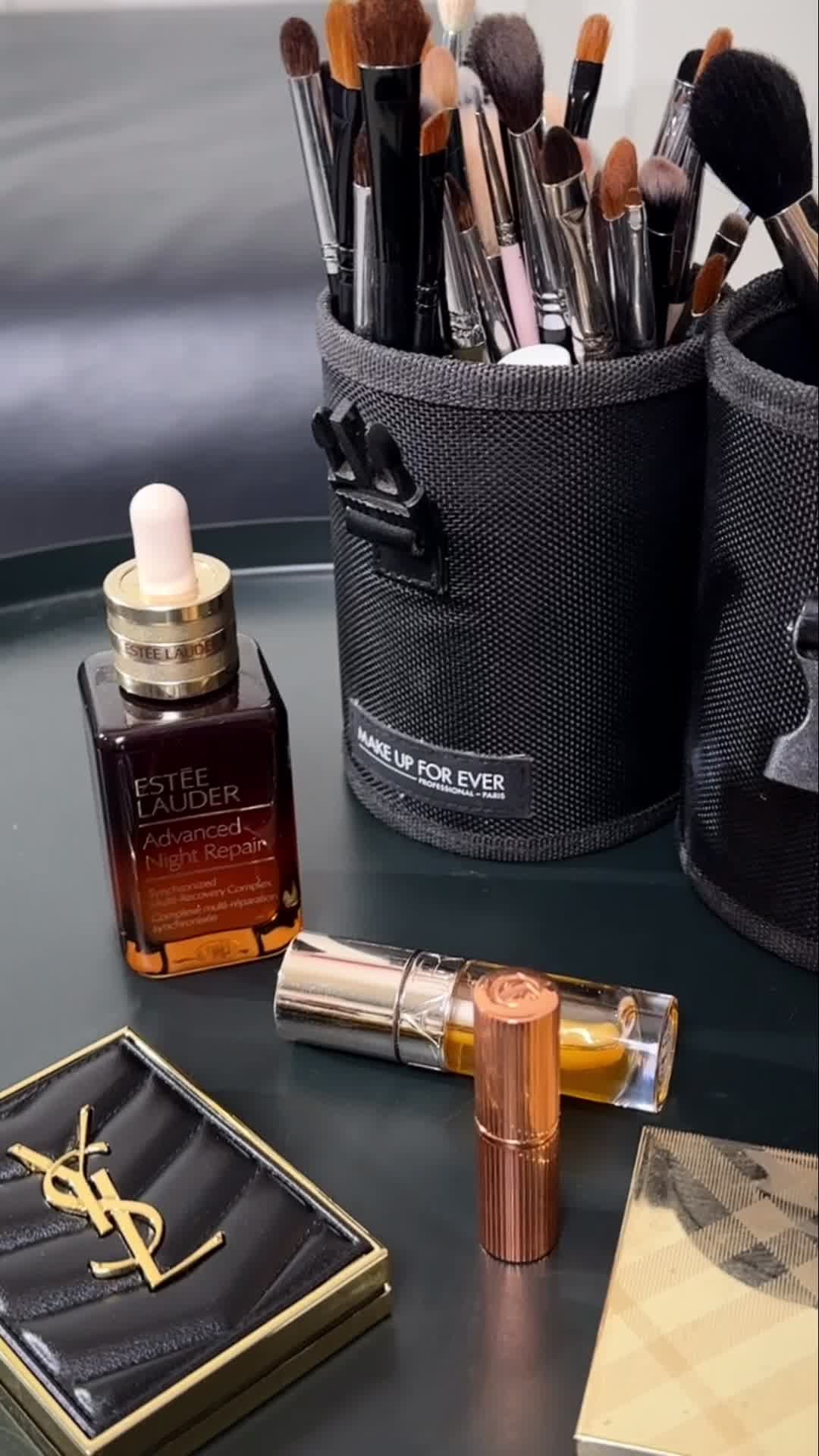
Airbrush makeup gets asked about a lot, usually because it sounds more advanced or more "wedding-proof" than traditional application. In reality, both techniques can look flawless on camera and hold up through a full Italian wedding day — they just achieve that in different ways, and one tends to suit certain skin types, venues, and personal preferences better than the other. Here's how they actually compare.
How each technique works
Traditional bridal makeup is applied by hand with brushes and sponges, building coverage in layers using cream and powder products. Airbrush makeup uses a small compressor and spray gun to apply a fine, even mist of liquid foundation directly onto the skin. Both are fully professional techniques — airbrush isn't inherently "better," it's simply a different tool that suits certain skin types and results better than others.
Where airbrush tends to shine
Airbrush foundation typically gives a very lightweight, second-skin finish that photographs beautifully in high-definition video and close-up shots, which matters if your videographer is shooting a lot of macro detail. It also tends to hold up well in heat and humidity — worth knowing if you're marrying somewhere like Lake Garda in peak summer — because the product bonds to skin in thin layers rather than sitting on top of it. It can be a strong option for combination or oily skin types that struggle with product breaking down through a long day.
Where traditional application tends to shine
Traditional makeup generally offers more buildable, precise coverage, which makes it easier to conceal specific redness, dark circles, or blemishes exactly where needed rather than applying an even layer everywhere. It also tends to suit drier or more mature skin better, since cream and powder formulas can be layered with hydrating products underneath in a way that keeps skin looking soft rather than emphasizing texture. For brides who want a very soft, natural, your-skin-but-better finish, traditional application often gets there more easily.
What actually matters most: skin type and venue
The honest answer is that neither technique is universally "better" — the right choice depends on your skin, the climate where you're getting married, and the finish you want in photos. A trial is the best way to find out, since it lets you see both approaches on your own skin under real lighting rather than guessing from photos of someone else's wedding. Whether you're marrying at a villa in Tuscany in summer heat or somewhere cooler in the shoulder season, what matters is choosing a technique that's suited to that specific setting.
Questions worth asking your makeup artist
- Do you offer both airbrush and traditional application, or only one?
- Based on my skin type, which would you recommend for my wedding?
- How does each option perform in the climate and season of my wedding?
- Can I try both at my trial to compare side by side?
- Is there a price difference between the two?
A good makeup artist won't push one technique as universally superior — they'll ask about your skin, your venue, and the season, then recommend what genuinely suits your day. If you'd like to talk through which approach makes sense for your wedding, or book a trial to compare both in person, get in touch with your date and venue details.