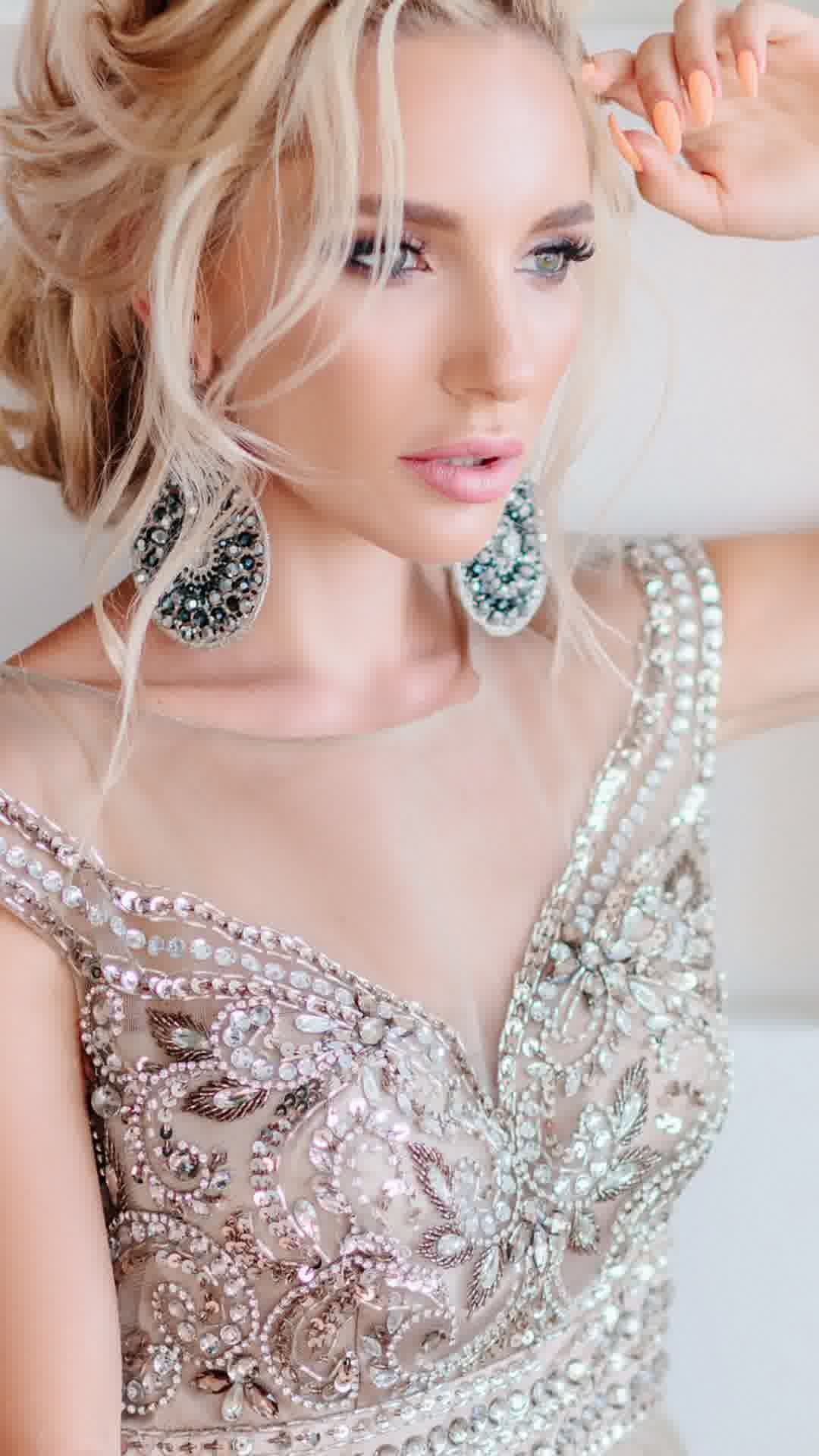
Most brides arrive at their first consultation with a Pinterest board of hairstyle inspiration, and almost none of those boards were photographed in Italian summer heat, lakeside wind, or the humidity that builds over a twelve-hour wedding day. A style that looks effortless in a styled photoshoot can behave very differently once it's holding up through a ceremony, a cocktail hour in direct sun, and dancing into the evening. This guide is less about trends and more about what actually survives an Italian destination wedding day, and why.
Updo vs. Down: What Actually Survives an Italian Wedding Day
A structured updo is almost always the safer choice for an outdoor Italian wedding, particularly anywhere near water or on an exposed terrace. Loose, undone waves photograph beautifully in a studio, but heat and humidity work against them over several hours, and any real wind — common on lakeside or coastal venues — can undo hours of styling within minutes. That doesn't mean down styles are off the table; it means they need real preparation underneath — texture, setting, and often a lighter hand with product than you'd use for an indoor event — rather than being left to hold on their own.
Working With a Veil
Your veil placement should be decided alongside your hairstyle, not as an afterthought once the style is finished. A cathedral veil needs a secure anchor point with real hair underneath the attachment, not just a few bobby pins at the crown — otherwise the weight of the fabric pulls at the style through the ceremony. It's also worth planning for the moment the veil comes off before the reception: some hairstyles are built to look finished either way, while others are designed specifically around having the veil in place, and it's worth knowing which you're choosing before the day itself.
Matching Your Hairstyle to Your Venue
Where you're marrying should genuinely shape what you choose. A countryside villa ceremony among vines or olive trees can usually support a softer, more romantic style as long as it has structure underneath to handle any breeze. A clifftop or coastal ceremony — like many venues in Sicily or Sardinia — calls for real hold against genuine wind, not just a light hairspray finish. A city or palazzo wedding, like one in Florence, is usually more forgiving since you're often indoors or in a more sheltered courtyard, which opens up more flexibility in what you can wear.
Why the Trial Matters More for Hair Than People Expect
A salon trial in an air-conditioned room tells you very little about how a style holds up outdoors in real Italian heat, humidity or wind. If your trial happens somewhere fully climate-controlled, it's worth asking your artist directly how the style is likely to perform outside those conditions, based on their experience with real weddings rather than a single controlled test. My guide to the bridal trial covers how to get the most out of that session, for hair as much as makeup.
A Few Practical Tips
- Choose real structure underneath any style you're considering for an outdoor Italian ceremony, loose or updo alike.
- Decide your veil attachment point and anchor style together with your hairstyle, not after.
- Match your style's hold level to your venue — coastal and lakeside settings need more security than a sheltered courtyard.
- Ask your artist specifically how your chosen style performs in heat, humidity and wind, not just how it looks in the trial mirror.
- Bring reference photos, but stay open to adjustments your artist suggests based on your hair type and your actual venue.