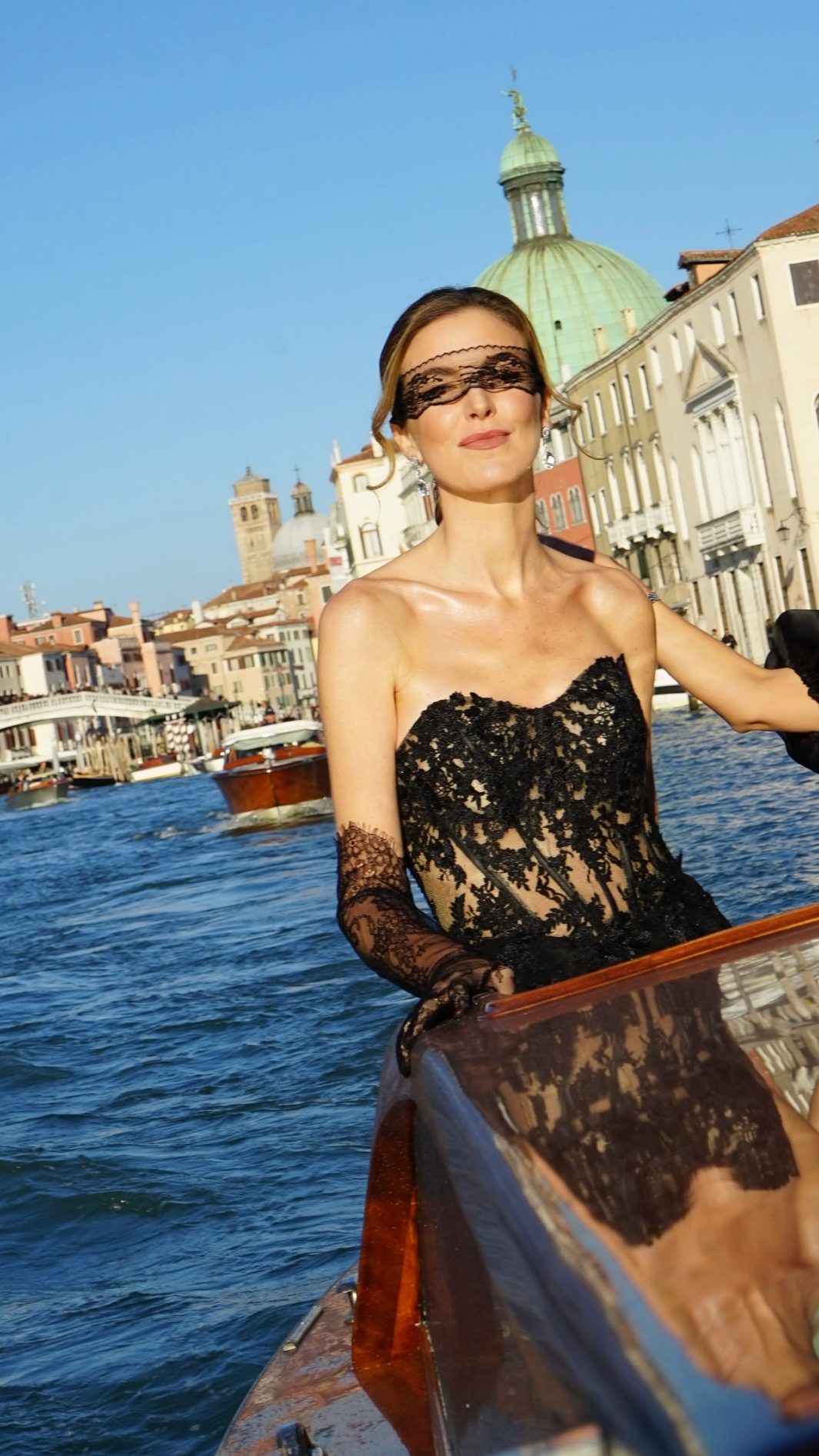
Getting married in Venice
There is no city in the world quite like Venice. Narrow canals catch the light between centuries-old palazzos, gondolas glide past under stone bridges, and every corner seems composed for a photograph. It's a destination that suits both an intimate elopement in a quiet courtyard and a grand reception on a waterfront terrace, with the golden hour over the lagoon as a backdrop few places can match. Venice is also wonderfully practical to love and slightly unusual to plan for: the city is car-free, and guests, vendors and brides alike arrive by water taxi or boat. I build my kit and my timing around that reality, arriving with everything I need and enough flexibility in the schedule to work with the city's rhythm rather than against it.
Where Venice weddings actually happen
In Venice the venue is also the route. Every palazzo has a water door and a land door, and which one you use decides how the bride arrives, how the veil travels and how long the morning needs.
Civil ceremonies at Palazzo Cavalli
The Comune di Venezia celebrates civil weddings at Palazzo Cavalli on the Grand Canal, opposite the Rialto bridge. The ceremony suite is on the piano nobile: a main room with a wall of windows over the canal, a small room with a view of the Rialto and an access hall, so the veil goes up a staircase once you step off the boat. Couples arrive at the palazzo's own landing by water taxi or gondola. The Comune also uses the Sala Cuoi d'Oro in Ca' Vendramin Calergi, the Sala Stucchi in Ca' Farsetti and the Sala Consiglio in Ca' Loredan.
Palazzi on the Grand Canal
Ca' Sagredo, Palazzo Pisani Moretta and Aman Venice in Palazzo Papadopoli are the addresses most receptions are built around. When you are also staying there, the morning is the easy version: the getting-ready room, the water entrance and the photographs are one building.
Riva degli Schiavoni and the islands
Hotel Danieli on the Riva, Belmond Cipriani on the Giudecca and San Clemente Palace on its own island all work with a boat between the bride and the ceremony. The hotel launches run to a timetable, and that timetable is what the hair and makeup schedule is built around.
Churches and quiet courtyards
A church wedding in Venice usually means a walk over at least one bridge in the dress, and an elopement often means a rented apartment on the third floor with no lift. I bring the kit up the stairs; what I need from you is the address, the floor and the nearest vaporetto stop.
Civil weddings in Venice: how the Comune sets your morning
The Comune di Venezia decides the hall and the hour, and those two facts decide when the boat has to leave your hotel.
Palazzo Cavalli is the best known of the Comune's wedding halls, but it is not the only one: the Comune also marries couples in the Sala Cuoi d'Oro in Ca' Vendramin Calergi, the Sala Stucchi in Ca' Farsetti and the Sala Consiglio in Ca' Loredan, and it lists several more outside the historic centre. According to the Comune's own pages its marriage office works Monday to Saturday from 8:45 to 13:00, ceremonies outside those hours carry different conditions, and a booking request sent at least seven days before the date is handled on the standard terms. The Sala Cuoi d'Oro is not available on 24, 25, 26, 30 and 31 December or on 1 January. Check the current rules with the Comune before you fix the date; they change.
When you know the hall and the time, send them to me together with the hotel. I count the morning back from the moment the boat has to leave, finish you last, and agree where the veil goes on. If you are not an Italian citizen, the guide to civil weddings in Italy explains the paperwork that belongs in the plan as much as the makeup does.
Beyond the Grand Canal: the Lido, Murano, Burano and Mestre
Venice is also a lagoon and a mainland city, and the plan for the morning changes with each.
The Lido and Malamocco
The Comune uses Palazzo Persico in Malamocco and a council hall at its Lido office for civil weddings. After a ceremony in the city, couples and guests reach the Lido by water taxi or private motorboat, and hotels such as the Villa Mabapa and the Des Bains host receptions. A church wedding on the Lido is possible for non-residents only at the discretion of the parish priest, so ask the parish early.
Murano, Burano and Pellestrina
The Comune lists council halls in the municipal offices of Murano, Burano and Pellestrina. These are islands without cars: the dress, the kit and the people arrive by boat and walk the last stretch. Whoever is getting ready on the island starts earlier and does not plan a second trip back for something forgotten. More on bridal makeup on Burano.
Mestre and Villa Querini
On the mainland, the Comune holds civil weddings at Palazzo della Provvederia in Mestre and, from 1 May to 30 September, in the park of Villa Querini (Parco Zanzotto), where it sets up the ceremony area, flowers and seating and moves the ceremony into a room in the villa if the weather turns. Here the morning runs by road, not by water, like any mainland wedding.
Acqua alta, the season and the morning
If you marry between October and March, the tide belongs in the plan.
According to the city's tourism office, acqua alta happens from October to March, about three quarters of the events fall in October, November and December, November is the peak, and in that season the high tides tend to come in the morning. The MOSE barriers at the lagoon inlets are raised when a tide above 110 cm is forecast, but lower tides of 80 to 100 cm can still flood the lowest ground. About four kilometres of raised walkways keep the main routes passable; they are narrow and busy and follow fixed lines.
For a wedding morning that means a second route agreed in advance, more time between the hotel and the boat, a hem and shoes that can cope, and a tide forecast checked two days before. The makeup does not change; the margin in the timeline does. I build that margin in from the start for autumn and winter weddings.