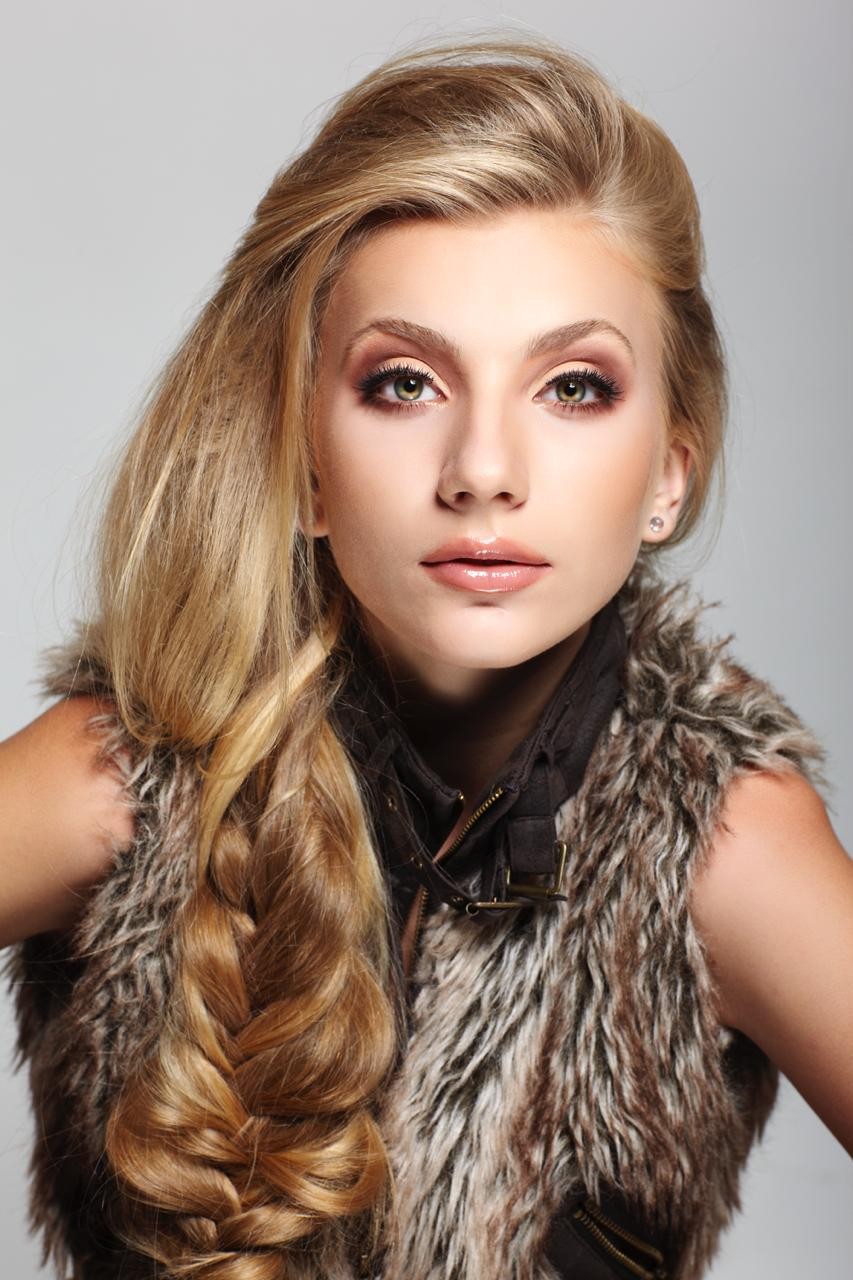
Most people book "hair" and "makeup" as though they were two unrelated errands — sometimes even with two different people, on two different schedules, each working from their own reference photo. In practice they're one decision, not two: your hairstyle changes how your face reads, which changes what the makeup needs to do, and the reverse is just as true. Treating them separately is the single most common reason a finished look feels slightly off even when each half, taken on its own, was done well.
Why the Two Can't Really Be Separated
A sleek, center-parted style pulls all the attention onto bone structure and eyes, so the makeup usually needs more definition to hold its own against that starkness. Soft waves or a face-framing style already do some of the softening work themselves, so the same amount of makeup can suddenly read as too heavy. An updo exposes your neck, ears and jawline in a way a down style never does, which changes where contour and highlight actually need to go. None of this is a fixed rule — it's exactly the kind of judgment call I've written about before in why makeup artists don't really divide looks into fixed categories — but it only works if one person is making both calls with the full picture in view, rather than two artists each optimizing their own half in isolation.
Where This Matters Most
It's easy to assume this only matters for a wedding, where hair and makeup are already booked together as a matter of course. In practice it matters just as much — often more — for occasions where people default to booking only one service, or two separately: a personal branding or portrait session where the photo will exist for years, a headshot or on-camera appearance where the framing is tight and unforgiving, an evening event where the venue and lighting shape both halves of the look the same way, or simply an ordinary day worth getting ready for. In all of these, there's rarely a second, separate hair appointment built into the day — which is exactly why it's worth having one artist think through both from the start.
What a Joint Consultation Actually Covers
When hair and makeup are planned together, the conversation starts from the same set of facts rather than two separate briefs: your face shape and features, your hair's natural texture, length and how it behaves in heat or humidity, the formality and lighting of the occasion, and how much time you actually have on the day. From there, the two elements get built around each other — a stronger, more sculpted hairstyle might mean a softer lip, or a bolder eye might call for a simpler, cleaner hair silhouette so nothing competes for attention. It's a genuinely different process from picking a hair inspiration photo and a makeup inspiration photo independently and hoping they combine well on the day.
The Practical Case for One Artist
Beyond the visual argument, there's a logistical one. Coordinating two vendors means two schedules to align, two sets of questions about the venue and lighting, and — if plans shift, as they often do — two people to update instead of one. Working with a single artist who does both means one appointment, one conversation about the occasion, and one person accountable for how the finished look actually comes together, not just how each half looks in isolation.
Booking Practicalities
I work on location across Verona, Vicenza, Venice, Lake Como, Lake Garda, Milan and the wider Veneto region, bringing a full kit for both hair and makeup to your home, hotel or venue. Appointments run in English, Italian, Russian or Ukrainian. Whatever the occasion — a portrait session, an event, a headshot, or simply a day you want to look and feel put together — the starting point is the same conversation: what the day actually involves, and how hair and makeup can be planned as one look rather than two separate ones.
A Few Practical Notes
- Bring reference photos for both hair and makeup if you have them, but expect a conversation about how they'll work together, not just two items being checked off separately.
- Mention your hair's natural texture and how it typically behaves in heat or humidity — it changes what's realistic to plan for, especially outdoors.
- Share the venue and lighting where you can — the same details that shape the makeup also shape which hairstyle will actually hold and photograph well.
- If two vendors are already booked separately, a short call between them beforehand goes a long way; I'm always glad to coordinate directly with a hairstylist or photographer ahead of the day.