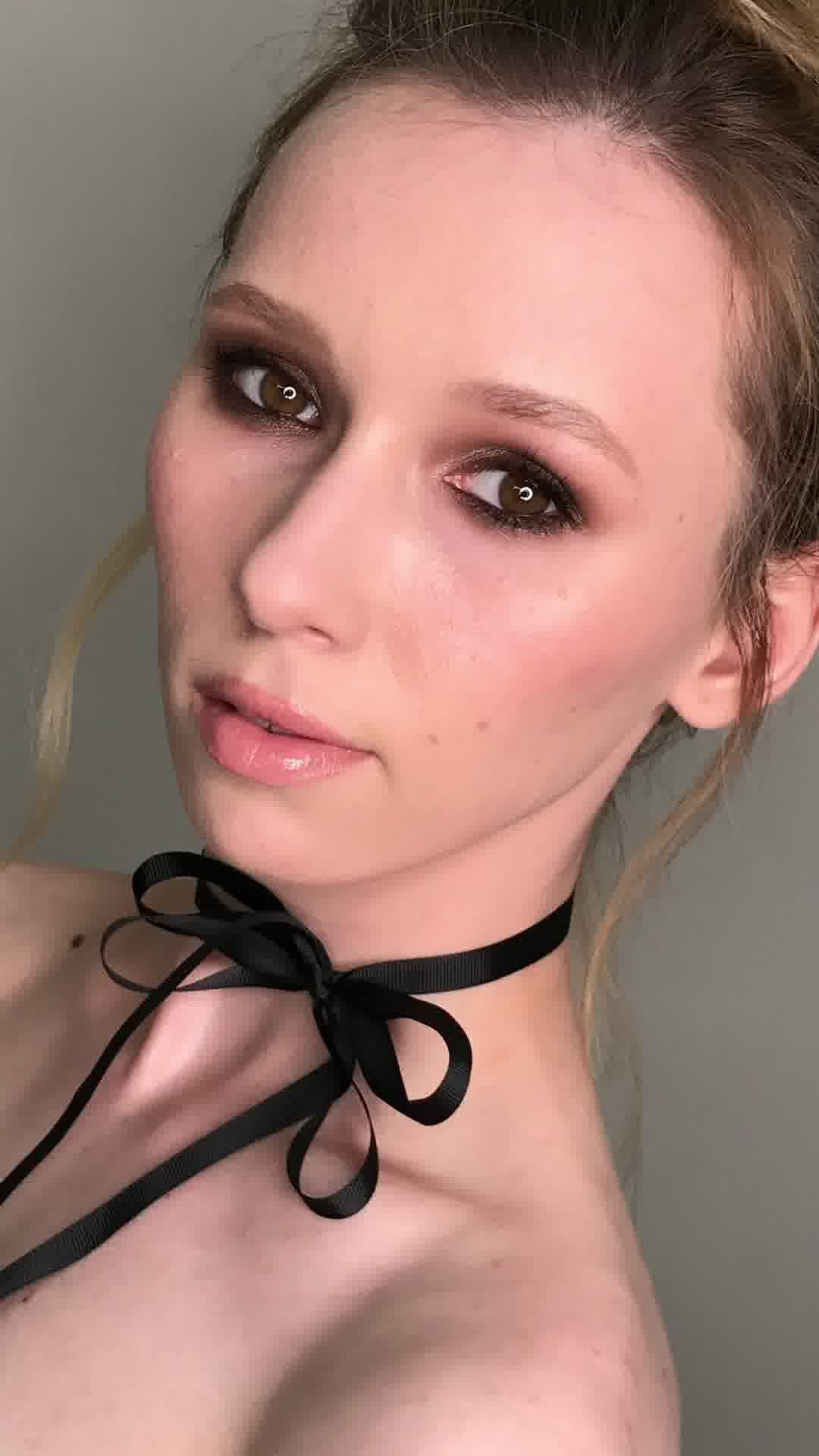
A personal-brand shoot is a different job from a wedding or an editorial concept, even though it uses many of the same skills. Where a wedding needs one look to survive one long day, and an editorial concept can afford to be bold and slightly unreal, a personal-brand shoot needs a look that photographs as recognisably, reliably you — across dozens of usable frames, in more than one setting, often used across a website, social profiles and print material for months or years afterward.
Why "natural" is actually the harder brief
Clients booking a personal-brand shoot almost always ask for something "natural" or "like me, just polished" — and that's a more demanding brief for a makeup artist than it sounds. Camera-ready makeup still needs to compensate for what studio or daylight photography does to color and definition, the same way any photoshoot does, but it has to do that compensating invisibly: the goal is a face that reads as effortless on screen while actually being carefully built to survive the specific lighting of the shoot. Overdo it and the photos look like a costume; underdo it and the face goes flat and washed out under the camera's harsher read on color and shadow.
This is where a portfolio genuinely matters more than a mood board: what you're really evaluating isn't whether an artist can create a dramatic look, but whether their "natural" looks actually hold up across a full shoot's worth of frames without going flat.
Verona's light, indoors and out
Verona offers a real mix of settings for this kind of shoot — sunlit piazzas and stone streets in the historic centre, softer interior light in a studio or a period building, and everything in between. Each calls for a slightly different approach: bright, direct piazza light needs a base and finish built to resist shine and hold color under strong sun, while a softer interior setting allows for more subtlety and a gentler, more diffused look that would read as underwhelming outdoors.
If the shoot moves between locations — an outdoor sequence and an indoor one, for instance — that itinerary is worth discussing with your makeup artist ahead of time, since the base and setting technique that hold up outdoors aren't always the ones that photograph best in softer indoor light, and planning for both from the start beats trying to fully redo a look partway through.
What actually makes personal-brand photos usable for years
A personal-brand shoot's real test isn't the moment it's taken — it's how the photos hold up as a body of usable material afterward, on a website header, a LinkedIn profile, a press kit, a book cover. That favors a look that's timeless rather than trend-driven: skin that looks like skin, definition that flatters your actual features rather than following a passing aesthetic, and color choices that won't read as dated in two years the way a very specific seasonal trend might. It's worth saying this plainly to your makeup artist before the shoot — that you want longevity, not a look built for this month's aesthetic — because it changes real decisions about color and finish.
It's also worth planning for enough time in the schedule for adjustment between setups. A personal-brand session often includes several distinct looks or wardrobe changes within one day, and rushing the transitions is one of the more common ways a shoot's later frames end up looking noticeably different from its earlier ones.
Coordinating makeup across wardrobe changes
Most personal-brand shoots involve more than one outfit — a formal look, something more casual, perhaps a signature color tied to a brand or a business. It's worth deciding in advance whether the makeup should stay essentially constant across all of them, with only small adjustments, or shift more noticeably between looks, since both are valid approaches but produce a different final result. A single, consistent base with small variations — a stronger lip for one outfit, softer for another — tends to keep a body of photos feeling cohesive as a set, which matters when the images end up side by side on a website or in a single brand gallery.
Color coordination is worth a specific mention too: a warm-toned outfit against a cool-toned makeup palette, or the reverse, can create a subtle clash that's more noticeable in photographs than it was standing in a fitting room, so sharing the actual wardrobe choices with your makeup artist ahead of the shoot — not just a general sense of the styling — tends to produce a more considered result than leaving the makeup as a separate decision from what's actually being worn.
Planning your shoot
Elena's work across editorial concepts, brand and beauty-industry events, and backstage at Milan Fashion Week sits alongside exactly this kind of personal-brand and portrait work — the same instinct for what actually survives the camera, applied to a brief built for longevity rather than for a single dramatic frame. If you're planning a personal-brand or portrait shoot in Verona, get in touch with your concept and how the photos will be used, or browse the photoshoots and editorial portfolio to see the range up close.