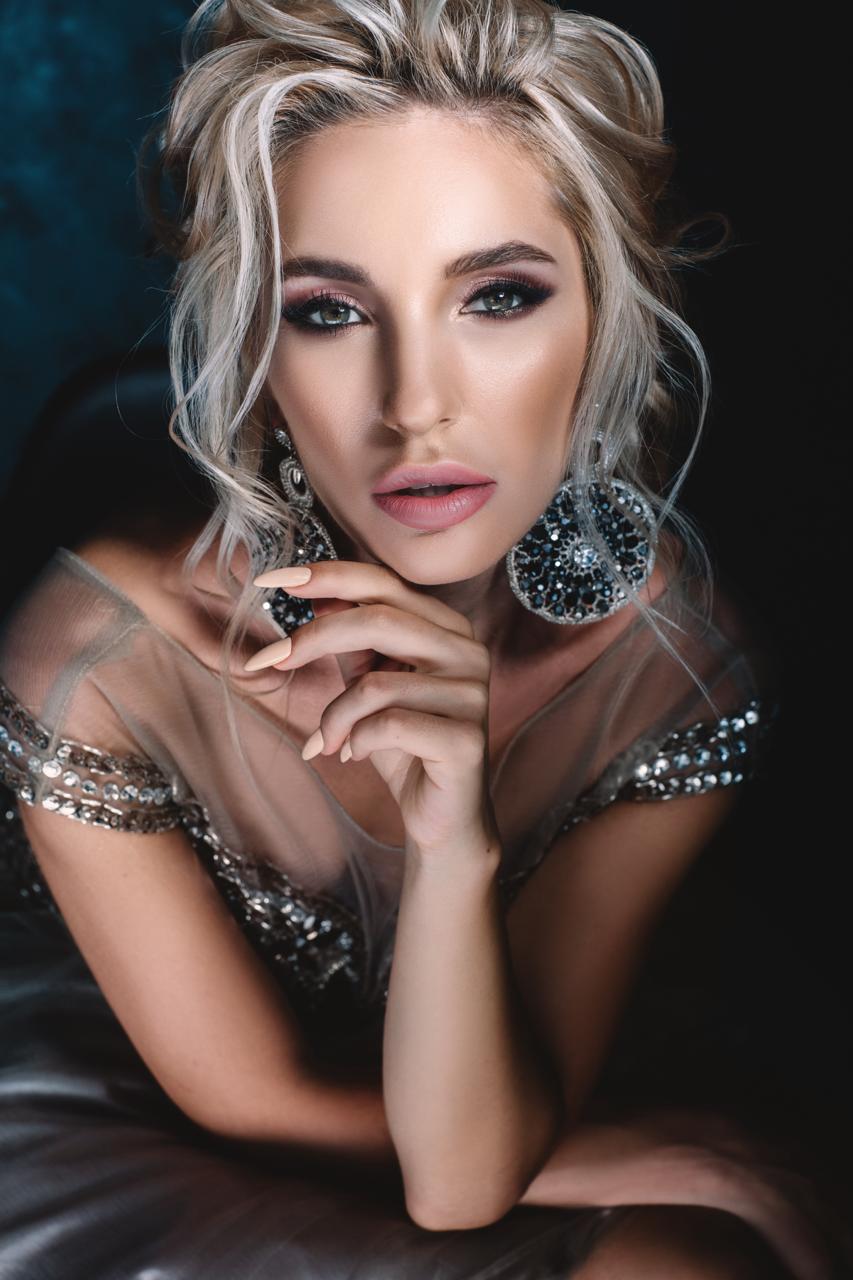
Booking a makeup artist for a photoshoot feels like it should be simpler than booking one for a wedding — one session, one look, done. In practice it's a different discipline with its own failure points, and most of them show up only once you're already looking at the photos. Whether you're planning a personal-brand shoot, an editorial concept, or a portfolio update, who does your makeup shapes the images more than almost any other choice you'll make that day.
Why photoshoot makeup isn't just "nice makeup"
Cameras don't record color the way your eyes do. Professional camera lighting and sensors can strip a large share of makeup's visible saturation and warmth — color that reads clearly in the mirror can look flat or washed out on screen. That's why makeup built for a shoot is often applied more boldly than it would ever be worn in person: it's calibrated for what the lens will actually capture, not for how it looks standing in front of a bathroom mirror.
Lighting is the other half of it. Daylight is soft and shifts slowly through the day; studio flash and continuous lights are harsher and more direct, and they punish anything with the wrong kind of shine. Skin that glows beautifully in person can throw back hot, blown-out highlights under flash — which is why camera-ready application leans on controlled, matte-to-semi-matte finishing and careful blending, not because "matte is better," but because it survives the specific way a studio light hits skin.
Look for range, not just one good photo
A single stunning image tells you a photographer and a retoucher did their job — it doesn't tell you much about the makeup artist. What actually matters is whether the same artist's work holds up across different lighting setups, angles and concepts within one shoot, because that's the job: a photoshoot rarely uses one light and one look for the whole session the way a wedding morning uses one light for the whole ceremony. A portfolio worth trusting usually shows a few different looks from the same session, not just the single frame everyone chose to post.
It's also worth asking whether what you're looking at is finished, retouched work only, or whether the artist can show you something closer to how the look actually read straight off the camera. Editorial makeup, by its nature, is built to be true for the photograph rather than for real life — it can be more graphic, more exaggerated, or stranger than anything worn day to day, and that's fine, as long as it was a deliberate choice for the shoot rather than something that happened to work in one lucky frame.
Questions worth asking before you book
A short conversation up front tends to surface the things a portfolio can't show you:
- How much time do you actually need? A rushed 20–30 minute application is a common shortcut, and it shows on camera — real camera-ready work usually needs time for consultation, reading the client's skin and features, and adjusting mid-session.
- Have you worked with this photographer, or this kind of concept, before? Photographer and makeup artist are collaborating on the same frame, and knowing each other's process in advance saves time on the day.
- Can multiple looks be built into one session, and how do you handle changes between them?
- Do you bring your own kit built for camera work, rather than everyday products repurposed for the day?
- What languages do you work comfortably in, especially if the shoot involves a team that doesn't all share one?
- If the shoot is on location rather than in a studio, are you familiar with working around natural light changes through the day?
Clear, specific answers are the sign to look for. Vague reassurance about "years of experience" without anything concrete behind it usually means the artist hasn't had to think it through recently.
What a well-run session actually looks like
A good photoshoot makeup session doesn't end when the brush goes down. It includes checking how the look reads in a test shot or on the photographer's monitor, and adjusting from there — a color or a level of shine that looks right to the eye doesn't always look right on screen, and the only way to know is to check. Backstage and editorial work also builds a different kind of speed and consistency than bridal work does: repeating a look reliably across a shoot, or across several models in a row at a show, is its own skill, distinct from getting one look exactly right once.
Elena's background runs through exactly that kind of work — backstage at Milan Fashion Week, editorial concepts, brand and beauty-industry events, and teaching other artists the technique behind it, alongside bridal work across Veneto and the rest of Italy. That combination is what a photoshoot actually needs: someone comfortable adjusting a look in real time against a monitor, not only in a mirror.
Photoshoot, event or wedding — not always the same brief
It's worth being upfront with your makeup artist about what the images are for, because photoshoot, event and bridal makeup are built around different constraints — camera and lighting for a shoot, longevity through a long evening for an event, and a look that has to hold up in daylight and in person for a wedding. An experienced artist adjusts for the brief rather than offering one fixed style regardless of what the day actually calls for.
If you're ready to talk through your shoot — the concept, the location, and the look you're after — get in touch with your date and a few details, or browse the photoshoots and editorial portfolio for a closer look at the range across different concepts and lighting setups.