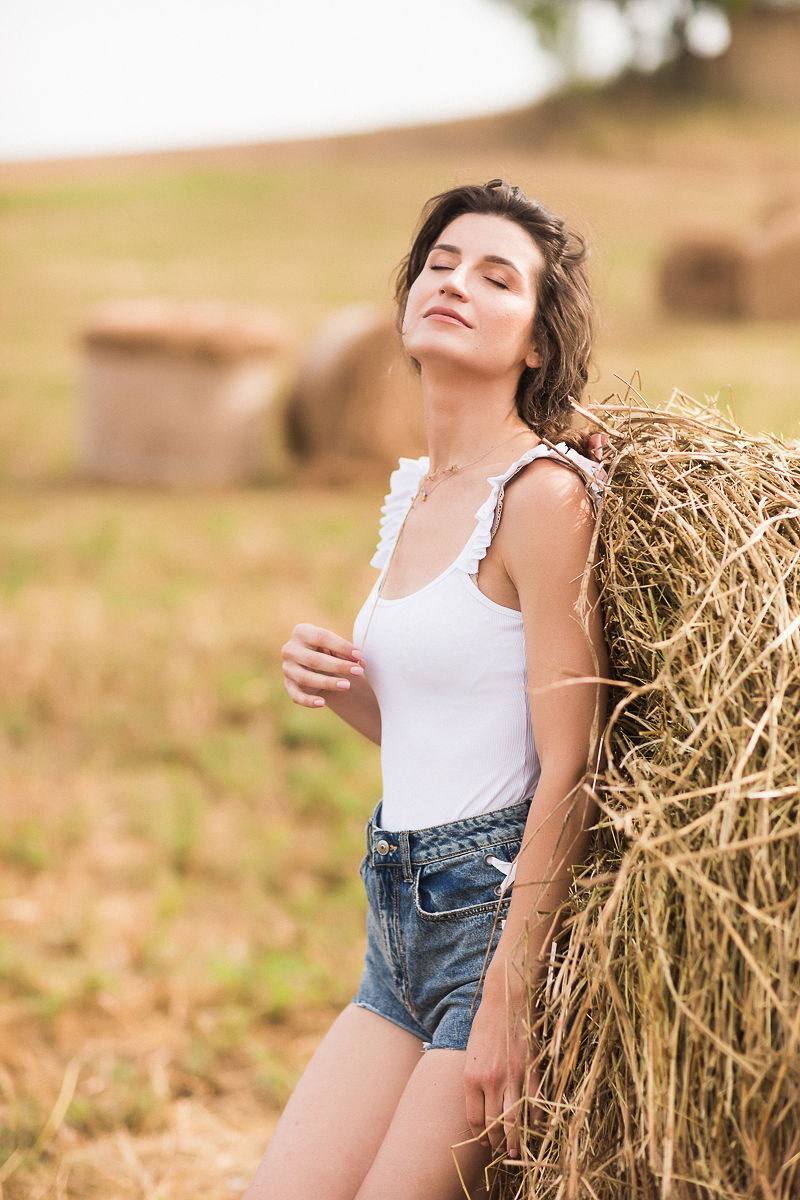
Golden hour at Lake Garda is one of the reasons photographers love shooting there — long evening light off the water, warm tones bouncing across the shoreline, mountains catching color as the sun drops. It's also a narrow, fast-moving window that puts real pressure on timing, and a lake environment that brings its own version of the problems any outdoor photoshoot has to plan around.
Warm light changes what "correct" makeup looks like
The low, amber light that makes golden hour so photogenic also shifts how every color on the face reads. Warm light naturally flatters skin and adds a glow that daylight or studio light doesn't, but it can also wash out cooler-toned makeup — a blue-based red lip or an ashy, cool-toned eye can lose definition and shift in color under strong golden light in a way a warmer-toned equivalent won't. Makeup planned specifically for golden hour tends to lean into warmer undertones rather than fighting the light with cool tones that were chosen without it in mind.
The light also changes fast. Golden hour is short — the difference between the light ten minutes into the window and the light thirty minutes in can be significant — which means the shoot itself usually needs to move at a pace the makeup has to be ready for well before the light actually arrives, not adjusted on the fly once it's already changing.
Lake wind and water are real factors, not scenery
A lake shoot means wind off the water is a near-constant, and it affects a look in two practical ways: hair needs styling that's built to move with the wind rather than fight it or collapse under it, and any makeup near the hairline or temples needs to hold up against hair blowing across the face repeatedly through the session. Humidity off the water is gentler than Venice's canal humidity but still worth planning for with the same long-wear approach any outdoor water-adjacent shoot calls for.
Shoreline locations also mean a mix of direct sun, reflected light off the water, and shifting shade depending on where along the lake you're shooting — a spot near Bardolino or Sirmione at sunset behaves differently from a more open stretch of shoreline, and it's worth discussing the specific location with your makeup artist rather than assuming one approach covers "Lake Garda" as a whole. Even the direction a shoreline faces changes things: a west-facing spot catches the sun dropping directly into frame, which throws warmer, more direct light straight at the face, while an east-facing view relies more on the ambient glow reflected across the water and the sky's color rather than the sun itself.
Planning around a short window
Because golden hour doesn't last, the makeup application itself usually needs to happen well before the light window opens, with a plan for very fast touch-ups rather than a full reapplication once shooting starts. That means choosing formulas and a finish built to hold through the wait as well as through the shoot — not just photograph well in the final ten minutes of perfect light, but survive the hour or more of setup, travel to the location and waiting that usually comes before it.
It's worth building a small amount of flexibility into the schedule too: golden hour's exact timing shifts through the year and can be affected by cloud cover, so a look that's been planned to hold for an hour rather than the planned twenty minutes gives a shoot room to actually wait for the light to be right, rather than shooting on a fixed schedule regardless of conditions.
What happens after the sun goes down
Many golden hour sessions at the lake run right past sunset into what photographers call blue hour — the short window afterward when the sky holds a deep, cool color and artificial or ambient light starts to matter more than the fading sun. That's a genuinely different lighting environment from golden hour itself, closer to the warm-versus-cool problem any evening shoot deals with, and a look built purely around warm golden light can suddenly look slightly mismatched once the light shifts cool. Sessions planned to cover both windows are worth discussing with your makeup artist as two related but distinct lighting conditions, rather than one continuous "sunset" brief.
If more than one person is being photographed together — a couple, a family, a small group — it's also worth planning individual looks that read consistently as a set under the same golden light, rather than each person's makeup being decided in isolation. Skin tones and features interact differently with warm light from person to person, and a look that flatters one person beautifully can need real adjustment to read just as well on someone standing next to them in the same frame.
Planning your shoot at the lake
If you're planning a golden hour or outdoor session around Lake Garda, get in touch with your location and timing, or browse the photoshoots and editorial portfolio for a closer look at how makeup adapts across different outdoor lighting conditions.